
What If Meditation Doesn't Help My Anxiety? A Different Approach That Worked for Me
How philosophical meditation works
I spent months trying meditation because everyone told me it would help my anxiety. Instead, I mostly fell asleep. When I woke up, every anxious thought was still waiting for me. That's when I realised something uncomfortable:
Meditation works brilliantly for some people.
But not everyone.
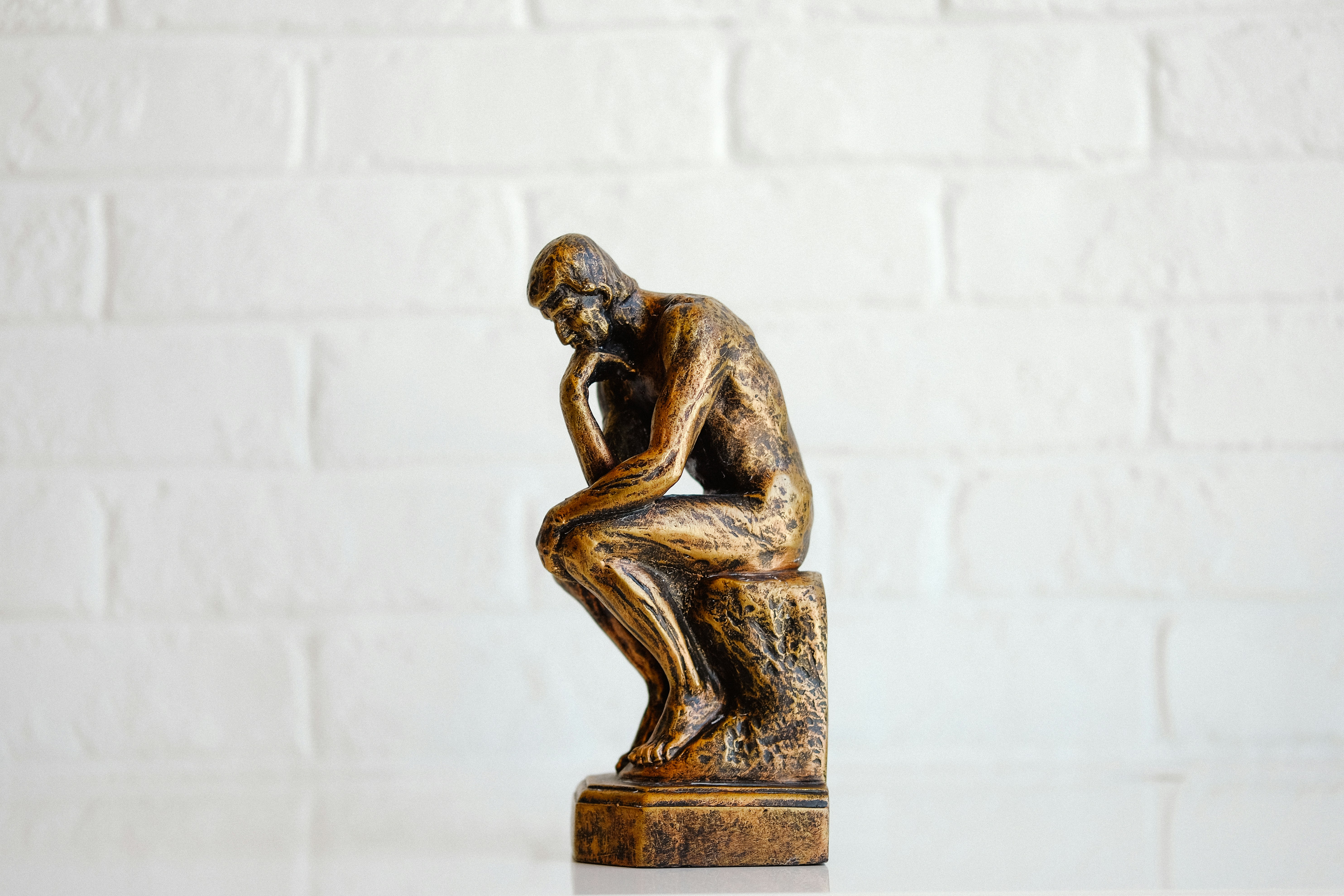
The Myth of the “One Size Fits All” Remedy
For years, anyone who admitted to stress or anxiety heard the same advice: try meditation, try yoga, try breathing exercises. I genuinely happy the people for whom that works. But I am one of those who tried, persistently, and felt nothing change.
For me, sitting still and trying to clear my mind didn’t bring peace. It mostly brought sleep. And then I’d wake up to find all my anxieties sitting right where I left them, patient as ever. So I came to believe that there is no single remedy that works for everyone.
So what actually works for minds like ours? Let’s figure out what’s happening and then see the solution.
What’s Actually Happening Inside Your Head
Before we get to the other approach, it’s worth understanding the problem more clearly. Because most of us dramatically underestimate how much mental noise we’re carrying.
The Hidden Marathon
Imagine you’re making yourself a cup of tea after work. A completely ordinary moment. Let’s see what’s actually happening inside your head while you wait for the kettle to boil:“The kitchen is a mess. I’ll clean it later. Actually, I said that yesterday. Why can’t I just stay on top of things? I need to reply to that email from Sarah; she’s probably annoyed I haven’t responded. Was her tone off this morning, or am I imagining it? I should call Mum, I haven’t called in two weeks. She won’t say anything, but she’ll notice. Did I lock the front door when I came in? I think so.”
The kettle clicks. Forty seconds have passed.
You pour the tea and sit down, and you feel, somehow, already drained. Nothing happened. No crisis, no confrontation, no bad news. Just a kettle boiling. And yet your mind ran a full marathon without you even noticing.
That’s the unconscious stream. It never clocks out.The Overloaded Inbox
Here’s the subtler version. You’re brushing your teeth in the morning. Nothing is wrong. If someone asked “are you in crisis right now?”, you’d laugh and say no. But notice what’s actually passing through your mind:“We’re almost out of milk.” (Anxiety: 1/10)
“The trash is getting full.” (Anxiety: 1/10)
“I need to text Sarah back.” (Anxiety: 1/10)
“Is my umbrella in the car or at the office?” (Anxiety: 1/10)
“That 2 pm check-in is going to be tedious.” (Anxiety: 2/10)Not a single thought is catastrophic. You dismiss each one as “no big deal.” And you’re right, individually, they’re nothing. But they’re not arriving individually. They’re arriving all at once, in an endless stream, every waking hour. Add them up across a day, and it’s no wonder you feel wrung out by evening without knowing why.
This is where standard mindfulness meditation doesn't resonate with everyone.
There’s Another Approach: Philosophical Meditation
What if, instead of trying to silence your thoughts, you turned around and faced them? That’s the core idea behind Philosophical Meditation, a practice rooted not in Eastern traditions of emptying the mind but in the Western philosophical tradition of examining it.
Ordinary life moves too fast for us to process events in real time, and so we accumulate a backlog of unexamined thoughts, unfelt feelings, and unresolved tensions that quietly fuel our anxiety, anger, and sense of being stuck.
However, the roots of this approach go much further back. Philosophical self-examination, reflective writing, and the practice of questioning our own thoughts have been central to traditions of philosophy for thousands of years. From Socrates’ idea of “knowing yourself” to the personal reflections of Stoic philosophers like Marcus Aurelius, many thinkers have explored the idea that understanding our inner world is essential to living well.
The insight behind philosophical meditation is simple: our anxieties are not just random noise to be switched off. They often contain information about what matters to us, what we fear, and what we have not yet processed. The reason certain worries keep returning may be because we have never stopped to properly listen to them.
How It Differs from Traditional Meditation
Traditional meditation asks you to step back from your thoughts, to observe them without engaging, let them float past, and return to the breath or the present moment. For many people, this is genuinely transformative.
But for others, especially those with busy, analytical, or anxious minds, it can feel impossible. The thoughts don’t float past. They pull up a chair.
Philosophical Meditation takes the opposite approach. Rather than sidestepping your worries, it asks you to sit down with them, examine them carefully, and understand what they’re actually made of. As De Botton puts it: “Instead of being prompted to sidestep our worries and ambitions, we are directed to set aside time to untangle, examine, and confront them.”
How Philosophical Meditation Works in Practice
Think of it as structured analytical journaling. You set aside some quiet time, even 15 minutes, with a pen and paper, and you work through a set of deliberately chosen questions.
There are two levels of depth you can choose from depending on how much time and energy you have.
Level One: The Essential Three
This is the simplest version, and often the most powerful place to start. Three questions, answered honestly.
Question A: “What am I anxious about today?”
This can be small or large. Don’t filter. Write it all down.
Smaller examples: Misplacing your keys. A growing to-do list. Worrying about being late somewhere.
Larger examples: A career transition that feels overwhelming. Financial pressure that won’t let up. A health scare.
Question B: “What am I upset or hurt about, and by whom?”
This one often surprises people. We’re good at brushing things off. This question asks you to stop brushing.
Smaller examples: A cancelled plan. A text left on read. A comment that landed wrong. A cold cup of coffee that somehow felt like a metaphor for your whole morning.
Larger examples: Feeling invisible or undervalued at work. A betrayal or misunderstanding in a relationship you care about.
Question C: “What am I looking forward to, or hoping for?”
This one helps you track what you desire and acts as a compass. It reminds you that beneath all the noise, you still have a direction.
Smaller examples: A weekend trip. Finishing a book you’re enjoying. A quiet evening.
Larger examples: A professional goal you’re building toward. A place you want to live one day. A relationship you’re hoping to build, or repair.
Level Two: Going Deeper
These questions are for if you want to go deeper, so feel free to skip them.
Question D: “What is the underlying story I’m telling myself?”
Often, an event isn’t what makes us anxious; it’s the narrative we build around it. If your manager sends a short, clipped reply, do you immediately tell yourself “I’m going to get fired” or “they don’t respect me”? Identifying the story is the first step to questioning whether it’s actually true.
Question E: “If a wise, compassionate friend were looking at my situation, what would they say?”
We are often far harder on ourselves than we would ever be on someone we love. This question forces a kind of emotional externalisation. Imagining a friend’s voice can cut through self-criticism in a way our own inner voice rarely can.
Question F: “What recurring fear is holding me back from growth right now?”
This is the deepest question, the one that connects your daily anxiety to your longer-term aspirations. The micro version might be a fear of looking foolish in a new situation. The macro version might be a fear of vulnerability, or of truly trying something and failing.
Curious About Where This All Comes From?
The ideas behind philosophical meditation are ancient, and some of the greatest minds in history arrived at the same conclusion across thousands of years.
Socrates gave us the simplest and most enduring instruction: “Know yourself.” He believed that most human suffering comes not from circumstances, but from a failure to understand our own minds and fears. Self-knowledge, for him, was the whole of philosophy.
Marcus Aurelius, Emperor of Rome, turned that idea into a nightly writing practice. Every evening, he sat alone and wrote out his fears and anxieties in a private journal, never intending it for publication. We now know it as Meditations, one of the most widely read philosophical texts in history. He wrote: “If you are distressed by anything external, the pain is not due to the thing itself, but to your estimate of it, and this you have the power to revoke at any moment.”
A Final Thought
Our brains are constantly trying to resolve unfinished emotional problems, almost like having too many browser tabs open at once. Until we examine them, prioritise them, or decide what to do about them, our minds keep bringing them back into awareness.
Writing doesn't magically remove anxiety, but it gives those thoughts somewhere to go besides endlessly looping in your head. And this is where a different approach to meditation can help: not by trying to silence the mind, but by helping us understand it.
This method doesn’t promise to remove your anxiety. It promises something more honest: that once you understand what you’re actually anxious about, it loses most of its power over you.
I still meditate sometimes.
But when my anxiety feels tangled rather than loud, I reach for a notebook instead.
Inspired by the work of Alain de Botton and The School of Life. If you’d like to explore this practice further, their book “The School of Life: An Emotional Education” is an excellent place to start.
You can listen to this Blog from here